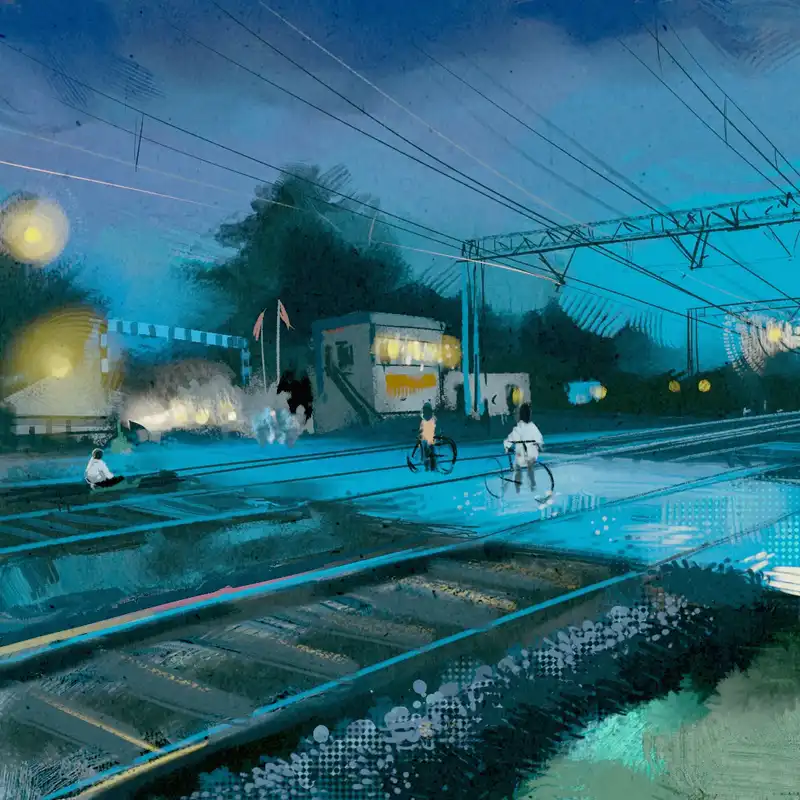
Until a decade ago. Until cold ever-burning incandescent LEDs, villages had a strange power to bring out contrasts; not the obvious, boring kind between a quiet village and a bustling city. A different kind of contrast. One that appears on quiet nights under the frequent load-shedding-black.
These odd hours lit only by the moon, flickering oil lamps, and glowing fireflies were when the familiar turned strange. The mind became a top-tier horror director, projecting something straight out of The Conjuring.
With everything bathed in the pale ivory light of the full moon, blonde hay on rooftops turn into morbid gray straws with cobwebs. Stuff that reminds you of death, witches and dementors.
That mango grove where you took a peaceful afternoon nap? By 9:00 PM, it’s a jagged silhouette, the kind of place where a brohmodoitto — one of those old-country Brahmin ghosts — sits in the branches, waiting for a boy to look up.
A few square feet of concrete in the courtyard - a noisy cricket pitch during the day, chaos and busybeing quietly submerges under the moon. Many homes have an extra washroom across the courtyard and you'd rather hold your pee till tomorrow than cross at night.
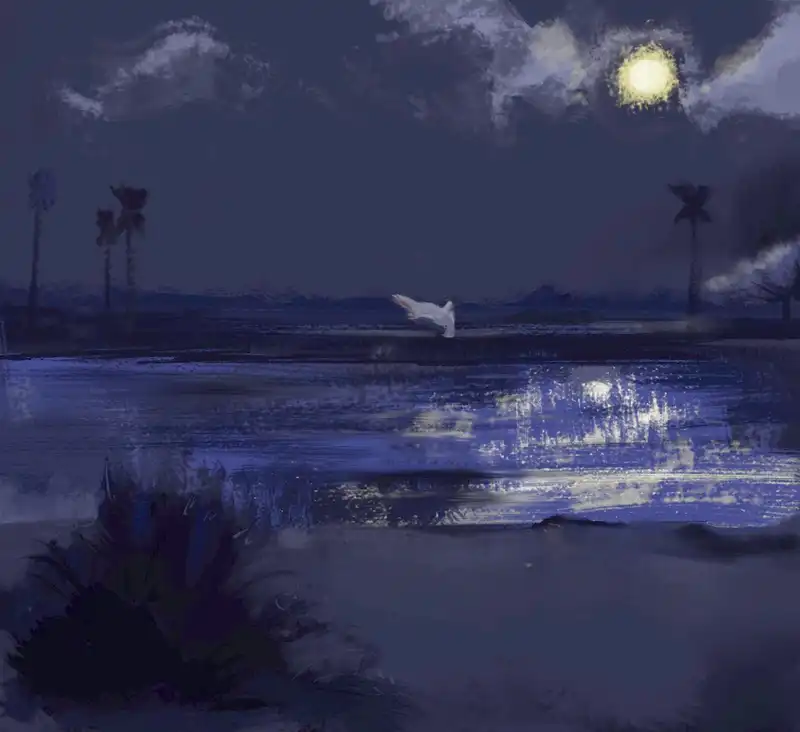
And yet, my dad and I had a ritual. After a heavy dinner, we’d go for a walk. We’d push past the hamlet of sleeping houses, right to the edge of the world where the paddy fields met the nearest lake.
That’s when you feel a gentle summer breeze. A sudden chill runs down your spine and it had nothing to do with the weather and everything to do with the realization that you were utterly, completely alone. Far off, a dog would start to howl.
You wonder: Does it see something people can't?
Your pulse would kick up a notch. Thump-thump. Thump-thump.
You'd stare across the lake. Moonlight shimmered over the water like a million silver needles. And then you'd see it.
On the far bank, something white flutters against a patch of dark shrubs.
Your rational mind—the civilized part that went to school and watched Discovery Channel—told you it was just a saree left out to dry.
But the younger child within you had already started whispering.
Is she standing there? Is it her?
Look away, the voice said. Don't look back.
Because if you looked back, there were only two possibilities, and both were terrifying.
What if the white cloth was gone?
Or worse...
What if it was right in front of you?
Eyes squeezed shut, you'd scramble to remember the defensive spells and rituals your grandmother had mentioned years ago, in stories that had once frightened you, but now felt strangely comforting.
"Babu" my father called.
His voice broke the spell. Thick, warm, and unmistakably real.
He reached out, and his hand — big, rough as rocks from years of honest work — wrapped around mine.
The monsters slipped quietly back into the weeds.
The funny thing is, I grew up to become a complete horror junkie. And looking back, I think this was the beginning.